
Driving Structural Excellence: Geotechnical Investigation Services in Jangipur, West Bengal When it comes to construction,…
Geotechnical Investigation in Dankuni West Bengal | Soil Testing Services
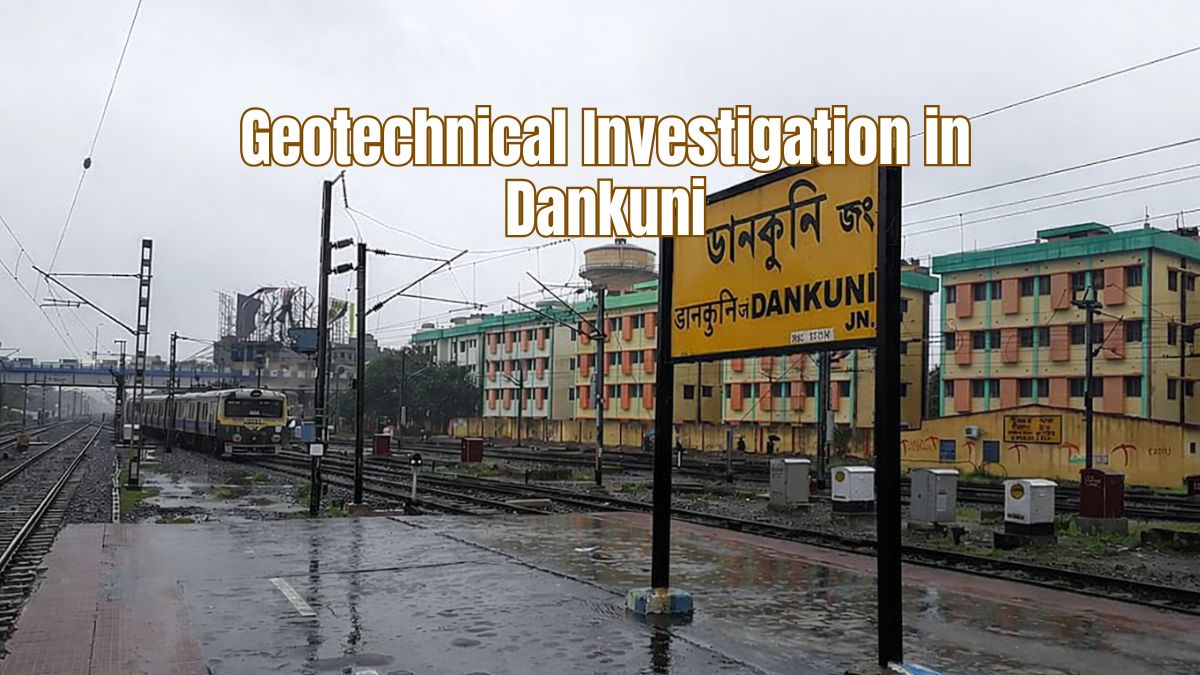
Expert Geotechnical Investigation and Subsurface Exploration in Dankuni, West Bengal: A Strategic Engineering Approach by Dibru Enterprises Overseas
The Industrial Heart of Hooghly: Engineering Challenges in Dankuni
Dankuni, located in the Hooghly district of West Bengal, has emerged as one of the most significant industrial and logistical focal points in Eastern India. As the meeting point of National Highway 19 and National Highway 16, and a major hub for the Dedicated Freight Corridor, the demand for robust industrial sheds, warehouses, and manufacturing plants is at an all-time high. However, the very geography that makes Dankuni a logistical goldmine also presents some of the most complex engineering challenges in the Bengal Basin.
Dibru Enterprises Overseas, headquartered in Guwahati, Assam, specializes in navigating these complexities. With a core expertise in Geotechnical Investigation and Geophysical Exploration, we provide high-precision subsurface data to developers, government bodies, and industrial giants across India. In Dankuni, where the ground often consists of soft alluvial deposits and reclaimed wetlands, a scientific understanding of the soil is not just a safety requirement—it is a financial necessity.
The Geological Profile of Dankuni: From Wetlands to Warehouses
Dankuni sits within the lower Gangetic plain, specifically in a topographically low-lying interfluve region between the Damodar and Hooghly rivers. Geologically, this area is characterized by deep quaternary sediments, but Dankuni has a specific “Wetland/Marshy” history that sets it apart from neighboring industrial zones.
- The Challenge of Soft Hydromorphic Soils
Historically, large parts of Dankuni were permanently waterlogged marshes. Scientific boreholes in the region often reveal multiple layers of grey hydromorphic soils and organic peat.
- Engineering Impact: These layers are highly compressible. If a heavy warehouse is built on this soil without proper ground improvement or deep foundations, “Primary and Secondary Consolidation” can lead to massive structural tilting or floor sinking over time.
- Anthropogenic Fill and Fly Ash
Due to rapid urbanization, many low-lying areas in Dankuni have been filled with “Made-up Ground”—often using fly ash from nearby power plants or loose silty sand.
- Engineering Impact: Fill material is notoriously inconsistent. A geotechnical investigation must distinguish between the loose fill and the natural “Virgin Soil” to ensure that the foundation is not resting on unstable debris.
- Shallow Groundwater and Capillary Rise
Being a depressed area, the water table in Dankuni is extremely close to the surface, often at depths of 1.5 to 3 meters.
- Engineering Impact: High groundwater reduces the bearing capacity of the soil and poses a risk of “uplift” on lighter structures. It also necessitates specialized dewatering strategies during the excavation phase.
Specialized Geotechnical Service Offerings by Dibru Enterprises Overseas
We offer a dual-approach investigation strategy that combines direct physical sampling with advanced non-invasive geophysical techniques.
Field Exploration and In-Situ Testing
- Shell and Auger Boring: In the soft clays and silty sands of Dankuni, we use shell and auger methods to sink boreholes, ensuring that samples are retrieved without excessive disturbance.
- Standard Penetration Test (SPT): This is essential for determining the “N-values” of the alluvial strata. In Dankuni, low N-values (often below 5 in the upper 10 meters) signal the need for pile foundations or significant ground improvement.
- Vane Shear Tests: Given the presence of soft clay and peat layers, we perform in-situ vane shear tests to measure the undrained shear strength, which is critical for slope stability and embankment design.
- Static Cone Penetration Test (SCPT): This provides a continuous profile of soil resistance, allowing us to pinpoint the exact depth of thin, weak organic layers that standard boring might miss.
Geophysical Exploration (Non-Destructive Testing)
- Electrical Resistivity Tomography (ERT): We use ERT to map the lateral variations in the subsurface. This is particularly useful in Dankuni for identifying the boundaries of old filled-up ponds or marshes.
- Ground Penetrating Radar (GPR): For industrial expansions in the existing Dankuni industrial estates, GPR is used to locate buried pipelines and old foundations that could obstruct new piling work.
- Seismic Refraction Surveys: By measuring the speed of seismic waves, we assess the soil’s stiffness and dynamic properties, which are vital for designing foundations for heavy vibrating machinery.
Adaptive Methodology: How Terrain Dictates the Work
At Dibru Enterprises Overseas, our pan-India experience has taught us that the “situation of the area” must drive the technology we use. Our work in the plains of Dankuni is vastly different from our operations in other terrains.
The Alluvial/Marshy Situation (Dankuni, West Bengal)
- Work Difficulty: Navigating soft, waterlogged sites.
- Focus: Settlement analysis and deep foundation depth.
- Typical Recommendation: Driven or bored cast-in-situ piles reaching depths of 25 to 40 meters to find a stiff clay or dense sand strata.
The Hilly Situation (North Bengal and Sikkim)
- Work Difficulty: Transporting rigs to steep, narrow locations.
- Focus: Slope stability and landslide risk.
- Typical Recommendation: Rock anchoring and micro-piles to secure structures against lateral forces.
The Rocky Situation (Western West Bengal / Jharkhand Border)
- Work Difficulty: Penetrating hard bedrock.
- Focus: Rock Quality Designation (RQD) and fracture mapping.
- Typical Recommendation: Shallow footings or raft foundations placed directly on the rock after pressure grouting.
Laboratory Excellence: From Samples to Engineering Certainty
The samples we collect from the Dankuni site are sealed and sent to our laboratory for rigorous testing. In this phase, we calculate the engineering variables that will dictate your project’s cost and safety.
- Consolidation Testing: We determine the “Compression Index” of Dankuni’s clay. This allows us to predict how many centimeters the building will settle over a 10-year or 50-year period.
- Grain Size Distribution: Knowing the percentage of fine sand and silt helps us evaluate the risk of Liquefaction—a phenomenon where saturated soil loses its strength during an earthquake.
- Chemical Analysis of Soil and Water: Dankuni’s industrial groundwater can contain sulfates and chlorides. We test these levels to recommend the correct grade of concrete (like SRC – Sulfate Resisting Cement) to prevent foundation corrosion.
- Atterberg Limits: These tests define the “Plasticity” of the soil, telling us if the clay will swell or shrink with seasonal moisture changes.
Why Choose Dibru Enterprises Overseas?
Based in Guwahati but serving all of India, our firm brings a unique perspective to the West Bengal industrial corridor.
- Expertise in Marginal Lands: We have extensive experience in building on “difficult” ground—from the floodplains of the Brahmaputra to the marshes of Dankuni.
- Integrated Reporting: We don’t just provide raw data. Our geotechnical reports provide a clear “Foundation Recommendation” section, helping architects and structural engineers optimize their designs.
- Modern Equipment: We utilize high-precision digital SPT hammers and advanced geophysical software to ensure that our data is accurate and reproducible.
- IS Code Compliance: All our work adheres strictly to Bureau of Indian Standards (IS:1892, IS:2131, etc.), ensuring your project meets all regulatory and insurance requirements.
Serving the Dankuni Industrial Ecosystem
Our services are tailored for the various sectors driving Dankuni’s growth:
- Logistics and Warehousing: Floor slab design and pavement analysis for high-load container movement.
- Heavy Industry: Dynamic soil properties for machine foundations to prevent vibrational settlement.
- Residential Projects: Cost-effective soil testing for the burgeoning residential complexes near the Dankuni railway station.
- Public Infrastructure: Investigations for bridges, flyovers, and drainage systems that form the backbone of the region.
Contact Information
For professional geotechnical and geophysical services in Dankuni and the wider West Bengal region, contact the experts who understand the ground beneath your feet.
- Phone: +91 93952 64997
- Email: dibru.ent@gmail.com
- Website: https://dibruenterprises.com/
- Base Office: Guwahati, Assam (Services available Pan-India)
Conclusion: Secure Foundations for a Modern Dankuni
Dankuni is a town on the move, but its future depends on its foundations. The soft, marshy soils of the Hooghly interfluve are not an obstacle to construction; they are simply a technical challenge that requires a scientific solution. By investing in a comprehensive geotechnical investigation, you ensure that your industrial or residential project is safe, durable, and cost-efficient.
At Dibru Enterprises Overseas, we are committed to providing that technical bridge between the geological reality of Dankuni and your vision for its development. Build with confidence—start with the right data.
Related Posts


This Post Has 0 Comments