
Driving Structural Excellence: Geotechnical Investigation Services in Jangipur, West Bengal When it comes to construction,…
Geotechnical Investigation and Subsurface Engineering in Kharagpur, West Bengal
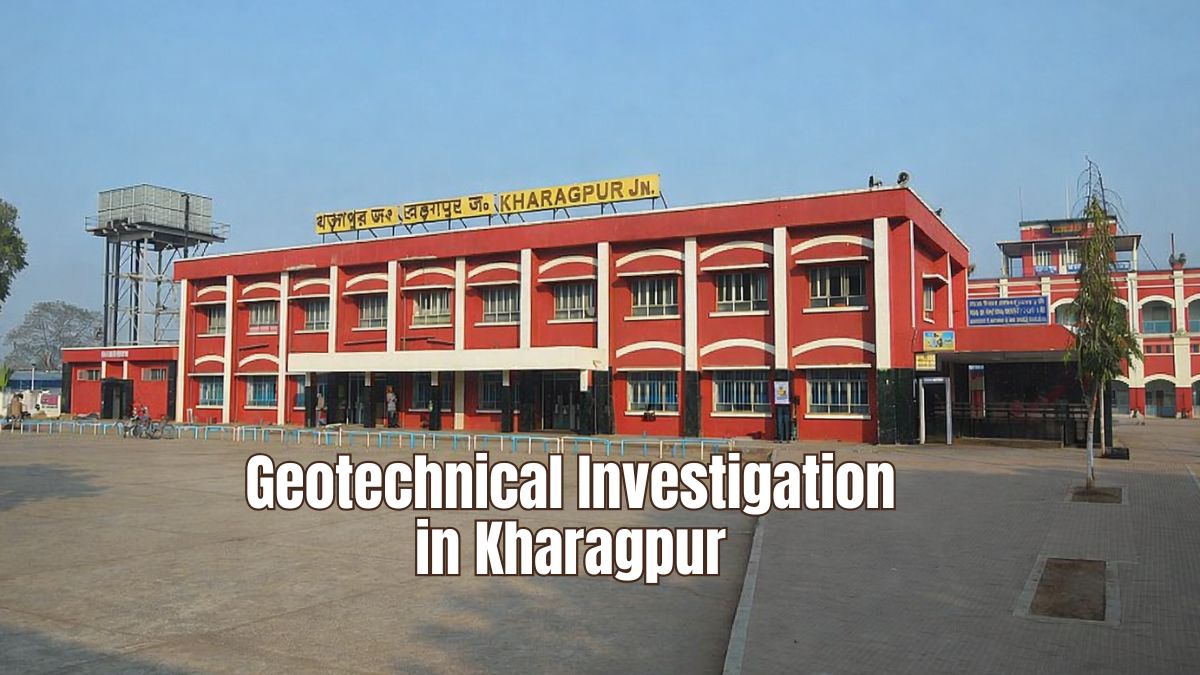
Geotechnical Investigation and Subsurface Engineering in Kharagpur, West Bengal: A Specialized Approach by Dibru Enterprises Overseas
The Strategic Importance of Subsurface Characterization in Kharagpur
Kharagpur, famously known as the “Hub of Education and Industry” in West Bengal, represents a unique geographical transition zone. Located in the Paschim Medinipur district, it serves as a critical junction between the soft alluvial plains of the east and the hard, rocky plateau regions of the west. For any major infrastructure project—be it the expansion of the IIT Kharagpur campus, new railway infrastructure, or heavy industrial plants—the ground conditions are vastly different from those found in Kolkata or Howrah.
Dibru Enterprises Overseas, based in Guwahati, Assam, provides specialized Geotechnical Investigation and Geophysical Exploration services tailored specifically for the challenging terrains of Kharagpur. With a pan-India service footprint, we bring advanced technology and scientific rigor to ensure that every structure in this historic town stands on a foundation of absolute certainty.
The Geological Identity of Kharagpur: The Lateritic Crust
Unlike the deep silt and clay deposits of the Hooghly basin, Kharagpur is dominated by the Rarh region’s lateritic soil. This geological feature presents a specific set of parameters for civil engineers.
- Lateritic Soil and Murrum
The soil in Kharagpur is predominantly red laterite, often containing “Murrum” (small pebbles or iron-ore nodules). This type of soil is formed by the leaching of silica and the accumulation of iron and aluminum oxides.
- Engineering Benefit: These soils generally offer much higher bearing capacity than the soft clays of the deltaic plains.
- Engineering Challenge: Lateritic soils can be highly abrasive to drilling tools and may hide soft pockets or “lithomargic clay” layers underneath a hard top crust.
- Hard Crust and Boulder Formations
At various depths in Kharagpur, one might encounter hard ferruginous crusts or even boulder-sized deposits. This requires a shift in drilling methodology from standard wash boring to heavy-duty rotary drilling or even rock core cutting.
- Variable Permeability
Because laterite is porous, the drainage characteristics can vary. Understanding the “Coefficient of Permeability” is essential for designing effective drainage systems for large industrial sites or residential townships in the region.
Comprehensive Geotechnical Services by Dibru Enterprises Overseas
We provide an integrated suite of subsurface exploration tools to map the unique soil profile of Kharagpur.
Field Exploration Techniques
- Standard Penetration Test (SPT): While N-values in the plains of West Bengal might range from 2 to 15, in Kharagpur’s lateritic layers, they often exceed 30 or 50. This indicates high density, but our technicians ensure precise recording to distinguish between true soil strength and the presence of pebbles.
- Rock Core Drilling: When the lateritic crust becomes too hard for standard sampling, we employ diamond core drilling to extract rock samples. This allows us to calculate the Rock Quality Designation (RQD).
- Plate Load Tests: Given the stiffer nature of Kharagpur soil, Plate Load Tests are highly effective here for determining the “Modulus of Subgrade Reaction,” which is critical for the heavy-duty pavements required in industrial and railway zones.
- Dynamic Cone Penetration Test (DCPT): A rapid method used in the Rarh region to assess the consistency of the hard top layers and detect any hidden soft zones.
Geophysical Exploration Services
In Kharagpur, where the bedrock or hard strata can be found at varying depths, geophysical methods provide a cost-effective way to map large areas.
- Seismic Refraction: This is used to determine the depth of the hard lateritic layer or the underlying bedrock. It helps in deciding whether to use shallow foundations or deep piles.
- Electrical Resistivity Tomography (ERT): ERT is particularly useful in Kharagpur for identifying groundwater pockets within the laterite and mapping zones of moisture that could lead to soil softening.
- Ground Penetrating Radar (GPR): Essential for checking the integrity of existing industrial foundations or locating buried railway utilities in the Kharagpur workshop areas.
Comparative Terrain Analysis: Why Geography Matters
At Dibru Enterprises Overseas, we understand that a geotechnical program must adapt to the “situation of the area.” Here is how our work differs based on the terrain:
The Plain Area (e.g., Howrah/Habra)
- Situation: Soft, deep alluvium.
- Primary Focus: Settlement and liquefaction.
- Work Difficulty: Deep drilling through soft mud; high risk of borehole collapse.
The Rocky/Lateritic Plain (e.g., Kharagpur)
- Situation: Hard top crust with potential soft layers below.
- Primary Focus: Safe Bearing Capacity (SBC) and abrasiveness.
- Work Difficulty: Tools wear out faster due to the gravelly nature of Murrum. Accurate sampling of the pebbles is crucial to avoid “false” high strength readings.
The Hilly Terrain (e.g., North Bengal/Assam)
- Situation: Steep slopes and weathered rock.
- Primary Focus: Slope stability and shear strength of the rock-soil interface.
- Work Difficulty: Transporting heavy rigs to steep locations; focus on horizontal stability rather than just vertical bearing.
Laboratory Testing and Engineering Parameters
Once the samples are extracted from the Kharagpur site, they are analyzed in our lab to determine the mathematical variables for foundation design.
- Unit Weight (γ): We determine the bulk and dry density. In lateritic soils, the unit weight (represented by the symbol γ) is typically higher than in silty soils, ranging from 18 to 22 kN/m³.
- Shear Strength (c and φ): We conduct Triaxial or Direct Shear tests to find the Cohesion (c) and Angle of Internal Friction (φ). Lateritic soils often show high φ values due to their granular, gravelly components.
- Chemical Resistance: We analyze the soil for acidity. Lateritic soils can be slightly acidic, which may impact the choice of cement or protective coatings for underground concrete structures.
Specialized Solutions for Kharagpur’s Industrial Growth
Kharagpur is a center for steel, cement, and manufacturing. These industries involve heavy, vibrating loads that put immense stress on the ground.
- Dynamic Analysis: For industrial clients, we provide dynamic soil properties required for “Machine Foundation Design.” This ensures that the machines do not vibrate at the same frequency as the soil, which would lead to structural damage.
- Pavement Design: Kharagpur serves as a logistics hub. We provide the CBR (California Bearing Ratio) values needed to design long-lasting roads that can handle heavy truck traffic.
- Environmental Impact: We conduct permeability tests to ensure that industrial runoff does not contaminate the local groundwater through the porous laterite layers.
The Dibru Enterprises Overseas Advantage
Why partner with a Guwahati-based firm for your Kharagpur project?
- Adaptability: Having worked in the high-rainfall hills of the Northeast and the rocky terrains of Central India, we are uniquely prepared for the “hard soil” challenges of Kharagpur.
- Equipment Excellence: We use high-torque drilling rigs that can handle the abrasive laterite without frequent breakdowns.
- Integrated Reporting: We provide a comprehensive Geotechnical Report that includes specific foundation type recommendations—whether a simple “Isolated Footing” is sufficient or if a “Raft” or “Pile” is needed.
- Pan-India Compliance: All our processes are in strict accordance with the Bureau of Indian Standards (IS Codes), ensuring that your project meets all regulatory and safety benchmarks.
Contact Information
For expert geotechnical investigation and geophysical exploration in Kharagpur, West Bengal, and across India, trust the experts at Dibru Enterprises Overseas.
- Phone: +91 93952 64997
- Email: dibru.ent@gmail.com
- Website: https://dibruenterprises.com/
- Headquarters: Guwahati, Assam (Pan-India Service Provider)
Conclusion: Foundations That Endure
Kharagpur is a town of permanence and academic excellence. Building in this region requires a deep respect for its unique geological history. The red laterite soil is a gift of nature that provides a strong base, but it also hides complexities that only a professional investigation can uncover.
At Dibru Enterprises Overseas, we are dedicated to providing the technical clarity and scientific data needed to turn the red soil of Kharagpur into the foundation of India’s future. Don’t compromise on the safety of your project—start with the truth of the subsurface.
Related Posts
This Post Has 0 Comments