
Driving Structural Excellence: Geotechnical Investigation Services in Jangipur, West Bengal When it comes to construction,…
Leading Geotechnical Investigation in Habra West Bengal
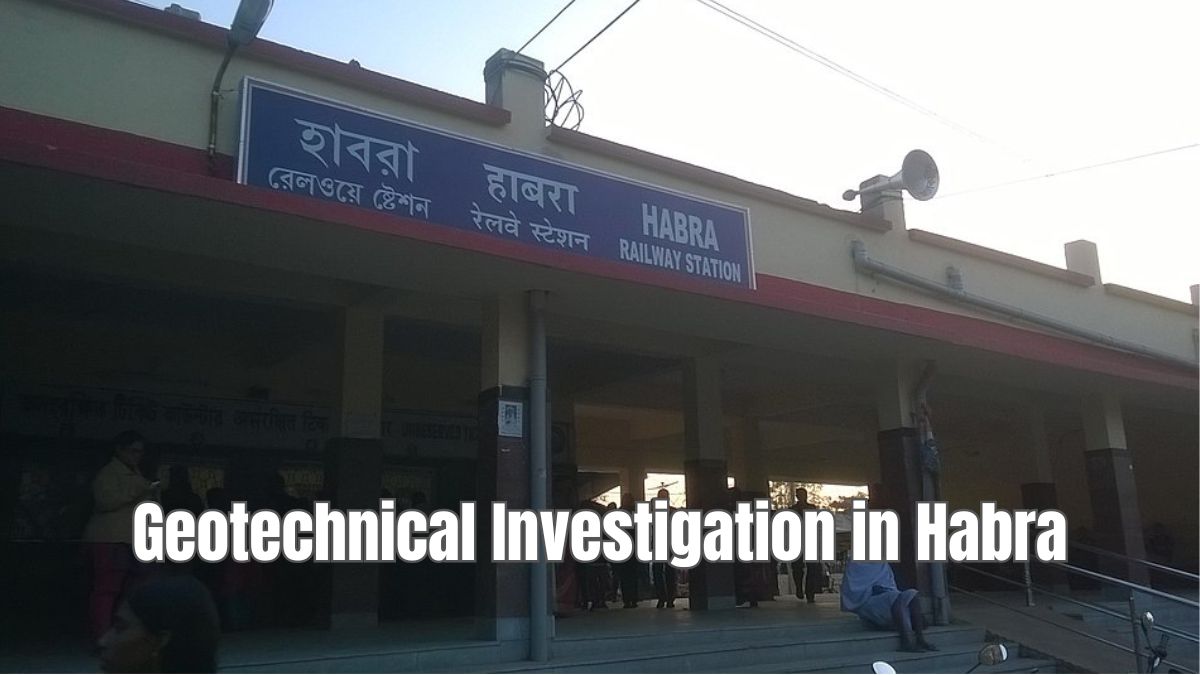
Geotechnical Investigation and Subsurface Exploration in Habra, West Bengal: A Comprehensive Guide by Dibru Enterprises Overseas
The Foundation of Progress in Habra
Habra, a burgeoning urban center in the North 24 Parganas district of West Bengal, is witnessing a period of unprecedented infrastructure growth. From multi-story residential complexes to sprawling commercial hubs and essential public works, the landscape is shifting. However, in this region of the lower Gangetic plain, the most critical phase of any construction project happens before the first brick is laid.
Dibru Enterprises Overseas, based in Guwahati, Assam, stands at the forefront of this developmental surge. With specialized expertise in Geotechnical Investigation and Geophysical Exploration, we provide the scientific data required to ensure that the structures of Habra are safe, stable, and resilient. Our pan-India experience allows us to bring a high level of technical rigor to every project, translating complex geological conditions into actionable engineering solutions.
Understanding Habra’s Unique Geological Setting
Habra is situated in a deltaic alluvial plain. This geographical context is the single most important factor in determining the type of foundation required for any structure. Unlike the rocky outcrops of the western part of West Bengal or the steep slopes of the North, Habra is defined by deep layers of quaternary sediments.
The Alluvial Challenge
The soil in Habra is primarily composed of silty clay, fine sand, and silt. These sediments were deposited by the complex river systems of the Ganges-Brahmaputra delta. For engineers, this presents several challenges:
-
High Compressibility: The clay layers in this region can be soft and saturated. Under the weight of a heavy building, these layers can compress over time, leading to significant structural settlement.
-
Fluctuating Water Table: The groundwater in Habra is often shallow. A high water table reduces the “Effective Stress” of the soil, which in turn reduces its bearing capacity.
-
Seismic Vulnerability: Much of West Bengal, including the Habra-Barasat belt, falls under significant seismic zones. In the event of an earthquake, loose, saturated sandy soils can undergo “Liquefaction,” where they behave like a liquid, causing foundations to fail instantly.
Geotechnical Investigation: The Dibru Methodology
At Dibru Enterprises Overseas, we do not believe in a generalized approach. Our investigation process is meticulously designed to map the subsurface of your specific site in Habra.
1. Subsurface Exploration (Field Work)
Our field operations involve direct interaction with the ground to extract physical samples and data.
-
Borehole Drilling: We use specialized rigs to drill deep into the Habra soil, often reaching depths of 20 to 50 meters, depending on the project’s requirements. This allows us to map the stratigraphy—the sequence of soil layers.
-
Standard Penetration Test (SPT): This is the gold standard for alluvial plains. By driving a sampler into the ground and counting the number of blows required, we determine the “N-value,” which correlates to the soil’s strength and density.
-
Undisturbed Soil Sampling: In the soft clay layers of Habra, we use thin-walled samplers to extract soil in its natural state. This is crucial for accurate laboratory testing of consolidation and shear strength.
2. Geophysical Exploration (Non-Invasive Analysis)
Sometimes, drilling alone is not enough, especially in congested urban areas or for large-scale infrastructure. We use advanced physics to “see” through the earth.
-
Electrical Resistivity Tomography (ERT): By measuring how the ground resists electrical current, we can identify groundwater levels, detect buried metallic objects, and delineate different soil types over large areas.
-
Ground Penetrating Radar (GPR): This is essential for urban Habra. It helps locate existing underground utilities, pipes, or old foundation remnants that could interfere with new construction.
-
Seismic Refraction Surveys: These surveys help us understand the dynamic properties of the soil, which is vital for earthquake-resistant design.
How Geography Changes the Game: Comparing Terrains
One of the strengths of Dibru Enterprises Overseas is our ability to adapt. Our work in Habra is significantly different from our projects in other parts of India. Understanding these differences is key to successful engineering.
The Plain/Alluvial Situation (Habra, West Bengal)
-
Primary Concern: Settlement and Bearing Capacity.
-
Soil Type: Soft clay and loose sand.
-
Foundation Strategy: Often involves deep pile foundations that transfer the building’s load to deeper, stiffer sand layers.
The Hilly Situation (North Bengal / Assam)
-
Primary Concern: Slope Stability and Landslides.
-
Soil Type: Residual soil over weathered rock.
-
Investigation Focus: We focus on the “Angle of Repose” and lateral earth pressure. We use inclinometers to monitor ground movement.
-
Foundation Strategy: Rock anchors, retaining walls, and step foundations.
The Rocky Situation (Plateau regions of Western West Bengal)
-
Primary Concern: Rock Quality and Excavation Difficulty.
-
Soil Type: Thin topsoil over hard bedrock.
-
Investigation Focus: We use diamond core drilling to calculate the Rock Quality Designation (RQD) and Unconfined Compressive Strength (UCS).
-
Foundation Strategy: Shallow foundations or raft foundations placed directly on the rock.
The Role of Laboratory Testing in Site Characterization
The samples we collect from Habra are transported to our specialized laboratory, where they undergo rigorous testing to derive the mathematical values needed for structural design.
-
Grain Size Distribution: This tells us the exact percentage of sand, silt, and clay. It is vital for determining the permeability of the soil and its drainage characteristics.
-
Atterberg Limits: We determine the “Plasticity” of the soil. This tells us how the Habra clay will behave when it gets wet or dry—whether it will swell or shrink.
-
Consolidation Testing: We simulate the weight of a 5-story or 10-story building on a small soil sample to measure how much it will compress. This allows us to predict the “Settlement” of the actual building over the next 50 years.
- Triaxial Shear Tests: These tests provide the “Cohesion” (C) and “Angle of Internal Friction” ( φ). These two values are the pillars of the Terzaghi bearing capacity equation:
Qu = cNc + qNq +0.5γBNγ
Using this formula, our engineers calculate exactly how much weight the ground in Habra can safely support.
Why Habra Needs Specialized Investigation
Habra’s rapid urbanization often leads to construction on “marginal lands”—areas that were previously ponds, wetlands, or low-lying agricultural fields. These areas are often filled with loose earth (fill material).
Building on “filled-up” land is highly risky without a geotechnical investigation. If the fill is not properly compacted, or if the structure sits partly on fill and partly on natural soil, the building will experience Differential Settlement. This is the primary cause of the tilted buildings and deep structural cracks seen in many developing towns. Dibru Enterprises Overseas specializes in identifying these weak zones and recommending “Ground Improvement” techniques like sand drains or stone columns to stabilize the earth.
Serving Diverse Sectors in Habra
Our service offering in Habra is designed to cater to a wide range of clients:
-
Residential Developers: Ensuring that apartment complexes are founded on safe strata to protect the lives and investments of homeowners.
-
Industrial Entrepreneurs: Designing foundations for warehouses and small-scale manufacturing units that can handle heavy floor loads and machinery vibrations.
-
Government Infrastructure: Providing data for roads, bridges, and public buildings that must stand the test of time.
-
Individual Home Builders: Offering cost-effective soil testing for single-family homes, ensuring a “crack-free” future.
The Dibru Enterprises Overseas Advantage
Why choose a firm based in Guwahati for your project in Habra?
-
Cross-Regional Expertise: Our experience in the complex geological terrains of Northeast India has made us experts in dealing with difficult soil conditions. We bring that same level of care to the plains of West Bengal.
-
State-of-the-Art Technology: From digital SPT hammers to advanced ERT software, we use the latest technology to ensure data accuracy.
-
Comprehensive Reporting: Our reports are not just data sheets; they are engineering guides. We provide clear recommendations on foundation types (Open vs. Pile), safe bearing capacities, and construction-phase precautions.
-
Regulatory Compliance: We ensure all our investigations follow the relevant Bureau of Indian Standards (IS Codes), facilitating smoother approvals from local municipalities and authorities.
Contact Information
If you are planning a construction project in Habra or the surrounding North 24 Parganas region, don’t leave your foundation to chance. Partner with Dibru Enterprises Overseas for precision, reliability, and engineering excellence.
-
Phone: +91 93952 64997
-
Email: dibru.ent@gmail.com
-
Website: https://dibruenterprises.com/
-
Base: Guwahati, Assam (Providing services all over India)
Conclusion: Building a Resilient Habra
The strength of a city is found in the stability of its structures. In a deltaic region like Habra, the ground is dynamic and challenging. A thorough geotechnical investigation is the only way to transform these geological challenges into engineering certainties. At Dibru Enterprises Overseas, we are committed to helping you build with confidence, ensuring that the progress of today becomes the heritage of tomorrow.
Related Posts



This Post Has 0 Comments